Most telecom subcontractors can tell you their revenue to the dollar. Ask them what they're owed. Or by which customer, on what real terms, or aging how fast. The answer gets fuzzy. It lives across three customer portals, a spreadsheet, an accounting system, and the owner's head.
That gap is expensive. You can't price a job you can't see the true cost of, and you can't get a good funding offer on receivables a funder can't trust. A certified receivables report closes both gaps at once. Here's what's actually in one.
One report, two forms: the KRS and the KRIB
Which one you get depends on how much of your book is connected.
Connect your first portal and you get a KRS, a Kapwork Relationship Snapshot. It's customer-level depth on a single commercial relationship: how that one customer really pays you, certified against their own system. Their data, not your memory. When most of your revenue runs through one or two customers, that snapshot is the number that matters most.
Once you've connected five or more customers, those snapshots roll up into a full-portfolio brief, the KRIB. Every customer, whole book, one page.
Same certified data underneath, same structure on top. Both carry one headline number and five pillars behind it.
The HEFT score: one number, five pillars
At the top of every report sits the HEFT score, out of 25. Five pillars, each scored out of five. It's a standardized triage number: a fast read on how relevant and fundable your book looks to a funder, built only from certified evidence. Not a credit score, not a promise. A filter that tells funders "this is worth a real look" before you've filled in a single form.
The five pillars are where the useful detail lives.
Pillar 1: Data certification strength. How much of your trading reality is independently observable? The report shows your sales figure next to your certified value, and the coverage between them. It also shows where the evidence comes from: portal sync, email extract, manual. A book that's 92% certified at the source reads very differently to a funder than a self-reported aging file, and this pillar is where that difference gets measured.
Pillar 2: Revenue consistency and seasonality. A quarterly heatmap and a monthly volume trend, built from certified invoices. For telecom subs this is where the build-season shape shows up, and it answers the question a funder always asks: does this trading cycle support predictable cash flow?
Pillar 3: Concentration, or the single relationship. This pillar changes with the report. The KRIB shows customer concentration across your book: top-1 and top-5 share, a concentration rating, and each major customer's slice with its median invoice and days-to-pay next to the telecom medians. Tower and carrier-direct crews often run 70% or more of revenue through one to three customers. That's fine right up until it isn't, and this page turns it into a number you manage on purpose. The KRS goes the other way: full depth on one relationship. Months of certified history, median invoice, median DSO, invoicing cadence.
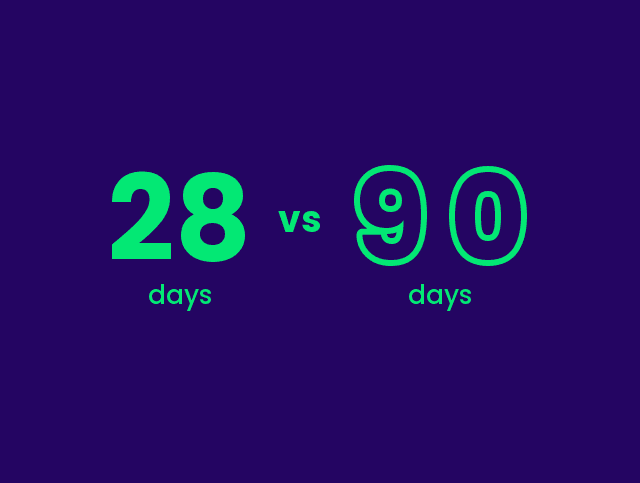
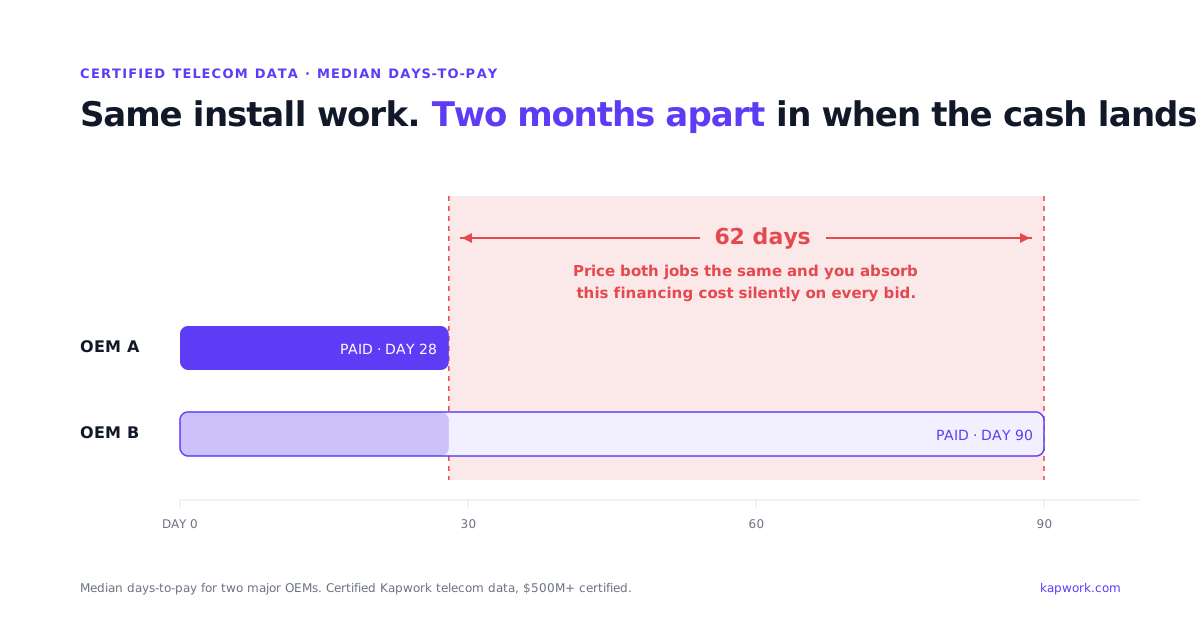
Pillar 4: Cycle structure and drift. How long your cash cycle actually runs, and whether it's stretching. This is where the spreads get visible. In certified telecom data one major OEM's median sits near 28 days while another's runs to 90. Same install work, a two-month difference in when the cash lands. Price both jobs the same and you absorb that financing cost silently on every bid. The KRIB tracks drift per customer over the trailing six months. The KRS drills into one customer's cycle over a full year. A customer who used to pay in 45 days and now takes 58 shows up here months before it shows up in your bank balance.
Pillar 5: Payment progression and dilution. Across the certified history, do invoices reliably progress to paid? The report breaks your certified value into paid, approved, sent, and rejected. That last slice matters more than its size suggests. Disputes and short-pays are the dilution a funder would otherwise have to guess at, and here they're counted instead of guessed.
How it gets built, without handing over your keys
Here's the part that makes it different from any credit application you've filled out. The report is built from your customer's own systems, and you stay in control the whole way.
You sign in to the portals you already invoice through, yourself. Kapwork never sees your logins or access codes. Your customer is never notified. There's no notice of assignment, no lien over your book, no field audit. Each invoice gets certified against the customer's system of record, and that certified data is what the report is built from. It's your data, your numbers, on your terms.
Why "certified" changes the offer, not just the picture
A funder looking at self-reported aging has to price in doubt. Is this invoice real, is it disputed, will it actually pay? That doubt is why uncertified telecom paper typically advances at 80 to 90% of face. When the same invoice arrives certified, confirmed in the customer's own system before a funder ever sees it, the doubt is gone. Funders on the Kapwork platform compete for it. Certified invoices have advanced as high as 95% of face. Across $500M+ certified in telecom, the pattern holds. Certified paper turns weeks of funder diligence into days.
To be clear about what Kapwork is and isn't. Kapwork doesn't lend, fund, insure, or guarantee anything. It certifies your receivables and lets funders bid. It's paid a small placement fee by the funder, only if you accept an offer you chose.
What it costs you: nothing
The report, and the certified, current picture of your receivables behind it, is free for businesses. If you never take a funding offer, you still keep a live, certified view of everything you're owed. Who pays at 28 days, who pays at 90, where your concentration sits, and which customers are drifting. That alone is worth the ten minutes.
How to get yours
It starts with one portal connect. About ten minutes, and you sign in yourself. Your first connect gives you a KRS on that relationship, with its own HEFT score. Connect the rest of your book and it grows into a full KRIB.
Certify your receivables, free →
Want to see one first? View a sample KRS, or the full KRIB it grows into, built on anonymized telecom data. Yours gets built from your own numbers.